

How to get customers without ads: a practical guide for small businesses
Published October 29, 2026
You offer a good service, but your calendar has gaps. You do not want to set aside more money for advertising every month. So how do you get customers without ads?
Start where people already look for help: search engines, maps, recommendations and local communities. Show what you offer, where you work and how to contact you. For a local service, it makes sense to connect a business profile, a simple website and genuine reviews.
Without paid ads does not mean without effort. You do not pay for clicks from regular search results, but you build visibility with content, trust and ongoing care. Publishing a website on its own does not guarantee customers.
1Complete your Google Business Profile
When someone needs a gardener or a hairdresser, they often search for services nearby. A Google Business Profile lets eligible businesses manage their information in Google Maps and Search for free.
If a profile already exists, sort out access first. Do not create a second one just because you cannot sign in. Check in particular:
- A name and category that match your real business.
- Phone, website and opening hours, if you list them.
- Your premises address or the area where you visit customers.
- Your services and your own up-to-date photos.
The profile is not meant for every type of business. Service-area businesses that visit customers follow separate rules: do not show a home address where you do not receive customers as your premises. Google's guidelines for business profiles explain the details.
Other free listings can help too, for example Bing Places for Business or Apple Business Connect, which feed maps in other apps. Start with correct contact details and a clear description of what you do.
2Give customers your own website with a clear offer
A maps profile helps people find you. On your website you can explain in more detail what you offer and who it is for. You can also share the link in recommendations, emails and social media posts.
A visitor needs to understand quickly:
- What service you provide and where.
- What the service includes and how working with you goes.
- What it costs, or how you set the price.
- What your real work looks like.
- How to call, send an enquiry or book an appointment.
One clear page can be enough to start. A specific offer and easy contact matter more than the number of sections. Open your website on a phone and follow the same path as a customer: find the service, check the terms and get in touch.
You can create a website in OAZEE, for example: describe your business and get a draft page with copy and design. Your first website is free to create and publish, and you check the details before publishing. Your own domain and extra pages come with the paid plans on the pricing page. For the full process, read how to create a website with AI.
3Use the words customers search with
"Complete solutions for your outdoor space" sounds very different from "Garden maintenance in Leeds and the surrounding area". The second sentence says straight away what you do and where people can use your services.
Write down the services you really offer and the area where you work. That gives you the first ideas for search queries, for example:
- garden maintenance Leeds
- lawn mowing Leeds
- hedge trimming Leeds
These are examples, not verified search volumes. Look at what results the search engine shows and compare them with your service. If you have data in Google Search Console, use the queries your website actually appears for.
Use the chosen service and location naturally in the page title, the main heading and the description of your offer. Answer practical questions too: what the price includes, whether you take away garden waste and how far you travel. Do not repeat the same phrase in every sentence, and do not list towns where you do not actually work.
Try OAZEE. Your first website is free.
Describe your services and the area you cover. OAZEE prepares a website for you to refine and publish.
Create a website free4Ask customers for reviews and make referrals easy
A happy customer can recommend your service. Make it easy for them: give them a link where a new customer finds your offer and contact details.
After finishing a job, you can ask for an honest review. Google lets you share a link or QR code that opens the review form for your profile. Do not buy reviews, and do not offer discounts or other rewards for them.
A simple request might read:
Thank you for working with me. If you would like to, please write a short review about your experience. It helps other people choose a gardener.
Reply to reviews calmly and factually. If you want to publish photos of a job or a customer's testimonial on your website, ask for permission first.
A referral needs a simple next step. When a customer sends your website to a friend, the friend should find the specific service and a way to get in touch. A link to an outdated profile or a page without contact details makes the referral harder than it needs to be.
5Join local groups and show your work
Choose one or two communities where your customers spend time. For a gardener, that might be a local Facebook group, a neighbourhood forum or a homeowners' community. For a photographer, perhaps a group about family events in the region.
Read the rules first. When someone is looking for a service, answer specifically: what you can do, where you work and how to arrange it. Add a link if the group allows it. Do not post the same advert in every thread.
On your own profile, show finished work, answer a common question or introduce a specific service. A photo of a neatly trimmed hedge with the location says more than a generic "We are here for you".
You do not need to be on every network. Start with one channel you can keep up regularly. When people go from a post to your website, a landing page with a clear offer and contact details helps them take the next step.
6Connect your website, profiles and contact details
A customer may discover you in one place and check the details in another. Make sure you use the same name, current phone number and a clear offer everywhere.
Link from your business profiles and social media to the matching page. On your website, show your contact details and, if you like, a link to the profile with reviews. Your email signature can link to your services. When your phone number or address changes, update every other place where it appears.
The point is not to collect as many profiles as possible. The point is that nobody has to guess which information is current and where to write.
Model example: a gardener in Leeds and the surrounding area
Imagine a gardener who offers garden maintenance, lawn mowing and hedge trimming. He works at customers' homes, has no shop and wants to fill gaps in his calendar.
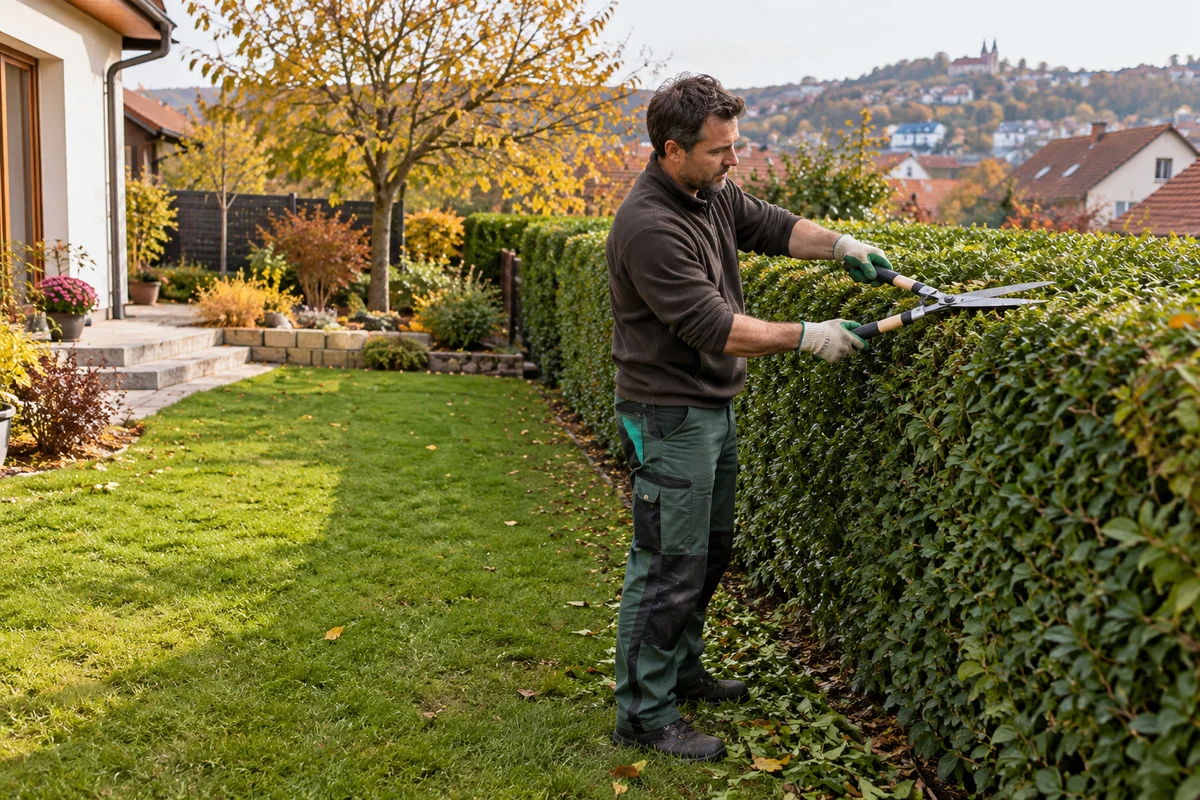
How he can connect the steps
On his website he clearly describes his services and his real service area. He adds his own photos of work, explains how he sets prices and includes an enquiry form.
In his Google Business Profile he sets a service area according to the rules and adds the website. After each job he asks for an honest review, and in a local group he replies to relevant requests when the rules allow it.
Result of these steps: a potential customer has a place to find the offer, see the work and contact the gardener. How many jobs this brings, only real results will show; this model example does not promise any numbers.

How to tell what brings you customers
For every new enquiry, write down the service and the answer to "How did you hear about us?". Distinguish, for example, Google, referrals, directories and social media. It is a useful start even without complex tracking.
Google Search Console shows the queries and clicks from search to your website. Web analytics helps you follow visits and their sources; properly set up, it can also record form submissions. For shared links you can use campaign tags, known as UTM parameters.
A visit, an enquiry and a paid job are different results. You will not always know the source of every visit or phone call exactly. If you connect analytics or advertising tools, respect the visitor's consent where it is required.
Once a month, look at which channels bring relevant enquiries and give them more attention. If people visit your website but do not get in touch, review your offer, trust signals and contact options. The ad campaign launch checklist helps here too: many of its points apply to visits from search as well.
What you can do today
Start with a small but specific step
- Choose one service and area to focus on.
- Check your business profiles and correct outdated details.
- Adjust your website so that visitors find the offer and contact details on a phone too.
- Prepare your own photos and a link for honest reviews.
- Choose one local community and learn its rules.
- For each new enquiry, note where the customer came from.
Do not wait until everything is perfect. Start with your offer and contact details, then add examples of your work and develop the channels that make sense for your business.
Frequently asked questions
Can you really get customers for free?
Yes, for example through referrals, a free business profile or regular search results where you do not pay per click. You still invest time in your work, presentation and communication, and some tools or your own domain may cost money.
Do I need a website if I have a Google Business Profile?
A website is not required for every business profile. It does help you explain your offer in more detail and gives you a page you can link to from many places. The profile and the website do different, complementary jobs.
How long until people find me on Google?
Nobody can promise a fixed time. Getting a page indexed and its ranking are two different things. It depends on your content, competition and other factors; for local results, Google considers relevance, distance and prominence. Keep an eye on real queries, visits and enquiries.
So do paid ads make sense at all?
They can, for example when promoting a specific offer or free slots. Organic channels can complement them. Before raising your budget, though, you need to know where you are sending people and what you expect from the campaign. OAZEE can help with the website and advertising banners; you set up and launch the campaign in the ad platform itself.
Try OAZEE. Your first website is free.
Give customers a place to find your services and contact details. Start by describing your business.
Create a website free